
 HELP ME PLAN

 HELP ME PLAN
Overview
Why Go
- Top wildlife viewing all year round
- Superb for spotting predators
- Black rhino is easily seen
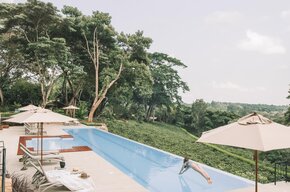
- Excellent mid-range and luxury lodges on the crater rim
- Staying on the crater rim offers great views into the crater
- Cultural visit to a Masai village is available
Wildlife
The Ngorongoro Crater offers some of the best wildlife viewing in Africa. All the major safari animals occur in great numbers. The resident population of black rhino is a real treat, as rhino are very difficult to spot elsewhere in Tanzania. The crater is also home to some very impressive elephant bulls with huge tusks. Lake Magadi often harbors large flocks of flamingo. More About the Wildlife
Scenery
The Ngorongoro Conservation Area is stunningly beautiful. Aside from the well-known Ngorongoro Crater, Empakaai and Olmoti craters are scenic highlights as well. Both the Ngorongoro and Empakaai craters regularly have flocks of flamingo. The forested crater rim of the Ngorongoro crater is in stark contrast with the crater floor, which consists mostly of grassland. Another feature on the crater floor is Lerai forest, a beautiful, atmospheric, yellow fever tree forest.
Best Time to Visit
You can spot wildlife down on the crater floor at any time of year. But the viewing is better in the Dry season (June to October) when the undergrowth has receded and animals tend to gather conveniently around waterholes and rivers. The only advantages the wetter months offer are fewer people and low-season accommodation rates. More About the Best Time to Visit
Weather & Climate
Conditions at Ngorongoro vary depending on the altitude. Higher up, at the crater itself, it can get quite cold at night, particularly up on the rim. But down in the greater conservation area it stays quite warm. During the area’s Dry season (June to October) there’s barely a cloud in the sky. In the Wet season (November to May) you’ll confront two periods of rain separated by a brief dry spell. More About the Weather and Climate
Reviews
Feedback Company
Tripadvisor
Wildlife & Animals
-

Elephant
Common -

Giraffe
Occasional -

Hippo
Common -

Buffalo
Common -

Zebra
Abundant -

Wildebeest
Abundant -

White Rhino
Common -

Black Rhino
Common -

Lion
Common -

Leopard
Occasional -

Cheetah
Common -

Hyena
Abundant -

Wild Dog
Rare
IUCN Red List Status Vulnerable
- LC
- NT
- VU
- EN
- CR
- EW
- EX
Least Concern
Current Population Trend:
Wildlife highlights
Best time for wildlife viewing
Best Time to Visit
Wildlife viewing inside the Ngorongoro Crater is superb at all times. However, grass on the crater floor is short in the Dry season (June through September) and this makes animal spotting easier. The scenery is lush and spectacular in the Wet season months (from November to May).
June to October
Dry Season
- Wildlife is easier to spot since the grass is shorter in the Dry season
- Rain is little to none and sunshine is abundant
- Chances of contracting malaria are slimmer, as there are fewer mosquitoes
November to May
Wet Season
- Ngorongoro Crater offers excellent wildlife viewing, even in the Wet season
- The scenery is green and beautiful
- Low season occurs in April and May – tourists are fewer, and there may be better rates
- Birding is in its prime due to the presence of migratory birds
- Except for in March and April, rains are mostly short afternoon storms and seldom interfere with your trip
Weather & Climate
Ngorongoro CA has a mild, temperate climate. The area experiences two Wet seasons. From October to November are the 'short' rains, followed by the 'long rains' from March to May. Rainfall is usually experienced in the form of short showers. The crater never gets very hot during the day, but the crater rim gets cold, and it can freeze at night. Warm clothing for early morning game drives is a necessity.
Climate Chart
- 1,027-3,522m / 3,369-11,555ftGetting There
Most people will visit the Ngorongoro Conservation Area as part of a bigger package, including a visit to the Serengeti. Conveniently, the conservation area lies en route and is only a three-hour drive on tarred road from the town of Arusha, the starting point of all safaris in northern Tanzania. From Arusha, you can hop around the parks of the northern circuit by small aircraft on chartered or scheduled flights, or you can drive and do the whole circuit by safari vehicle. A popular option is to fly into the Serengeti and make your way back by safari vehicle via the Ngorongoro crater, or the other way around. In most cases, your tour operator will pick you up from the airport. Coming from the Seronera area in the Serengeti, the distance to the crater is about 140km/90mi and the driving time is about three hours. This can obviously take much longer allowing for wildlife viewing along the way. The 80km/50mi drive from Lake Manyara to the Ngorongoro Crater takes about two hours, and the 180km/110mi drive from Tarangire takes about four hours. The best option to get to Arusha is to fly into Kilimanjaro International Airport (JRO), which is situated about 46km/29mi from Arusha. It is also possible to fly into Julius Nyerere International Airport (DAR), near Dar es Salaam and fly on to Arusha Airport (ARK) or Kilimanjaro International Airport (JRO).